Why we sell certainty, not products
Hardware, software, and cloud seats are easy to list. Certainty is harder: data that stays put, costs that stop climbing, and proof you can hand a client.
 Safouane Regaieg
25 AUGUST 2026 · 3 MIN READ
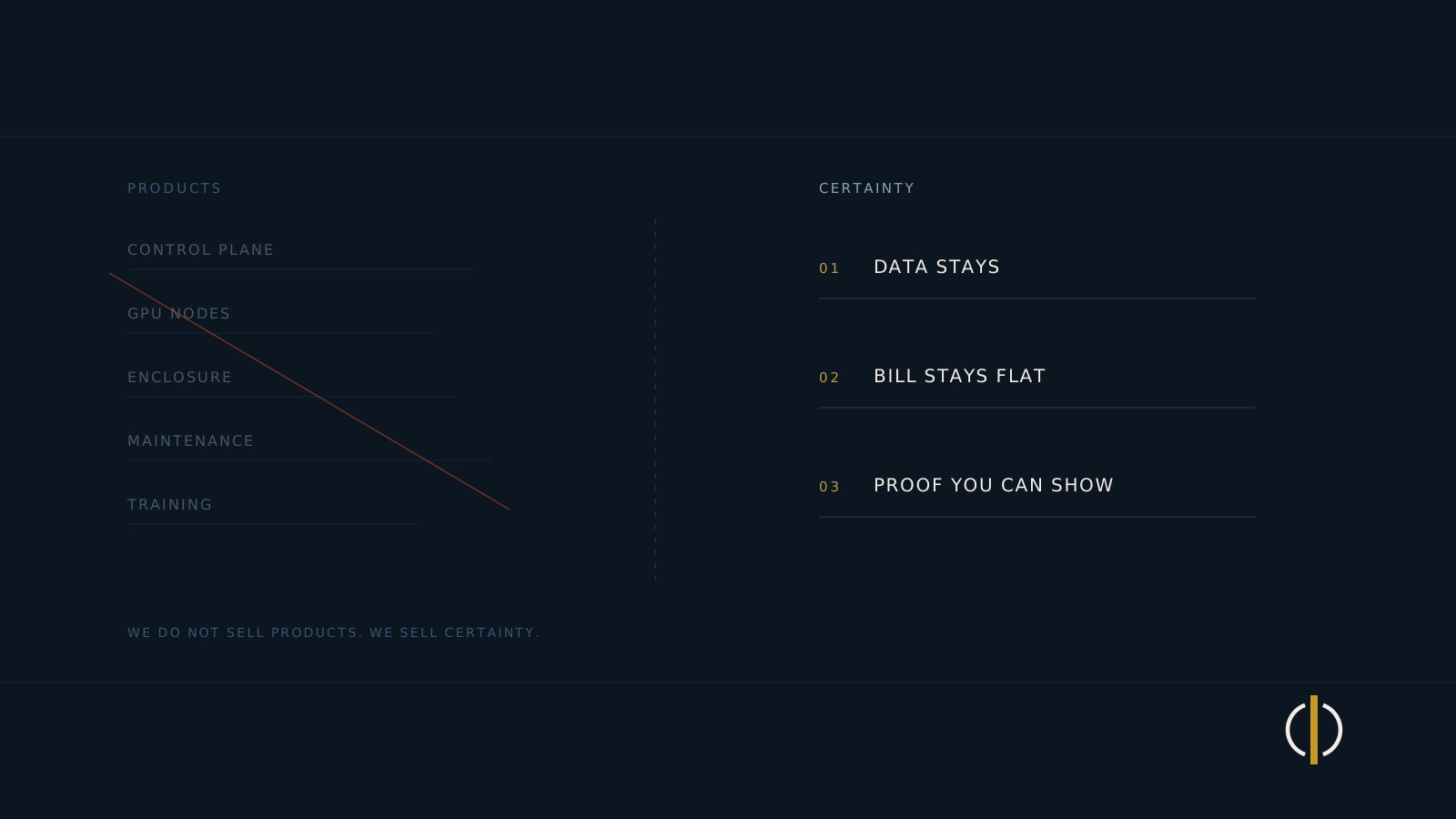
We can list what we ship. A control plane. Nodes on GPU machines. Install paths that run in your building or in a private enclosure. Maintenance. Training. The catalogue is real.
It is also not the thing clients are buying when they are honest with themselves.
They are buying the ability to let their team use AI without guessing where the text went, what it will cost next quarter, or what they will say when a client asks for evidence.
That is certainty. Products are how you deliver it.
What “certainty” means in practice
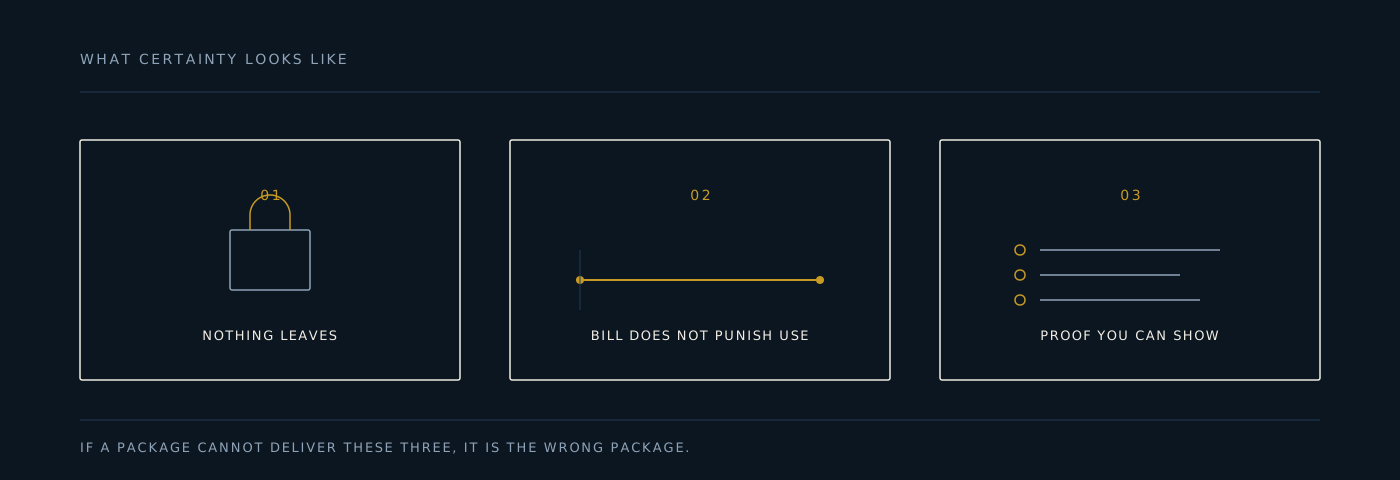
Nothing leaves that should not leave. Prompts and documents are processed where you agreed they would be processed — on hardware you control, or in an enclosure with a perimeter you can explain. Not on a consumer chatbot with a business invoice.
The bill does not punish adoption. When the floor finally uses the tool, finance should not open an emergency review. Fixed-cost systems make success cheaper per use. Metered systems make success expensive. We wrote about that curve in When metered AI stops being cheap.
You can show your working. Who used what, when, on which node. Enough to answer a partner, an insurer, or a regulator without assembling a story from browser history and hope.
Built in Tunis, deployed on-site worldwide
Phronexus is a private AI company based in Tunis. We design, deploy, and maintain systems for firms that handle other people’s secrets: legal, medical, accounting, finance, insurance, and the rest of the professions where an engagement letter still has your name on it.
We are not trying to be a public model lab. We are trying to be the team that puts owned intelligence in a building and keeps it honest after the install photo is taken.
The posture we refuse
We will not pretend every firm should buy a rack this month. Some should keep renting. Some should fix a process before they touch a model. Some need a different deployment shape than the one they asked for on the first call.
Talking you out of the wrong purchase is part of the job. A vendor who cannot name when they are a bad fit will also struggle to tell you the truth when something breaks.
How to test us
Use the same standard we publish for everyone else: seven questions before you sign. Ask them on the first call. Ask where data sits, what happens if we disappear, what the bill does at double usage, and who runs the system on a Friday evening.
If you want the short path: try a free node on your hardware or ours — no card — and see whether the control plane feels like something your existing IT can live with.
Peace of mind, engineered
The line on our site is deliberate. No deck theatre. No follow-up sequence that confuses persistence with fit.
You either get a system you can own — privacy, performance, simplicity, sovereignty — or you get a clear no. Both outcomes are useful. Only one of them looks like a product SKU.
Comments
A short note. No account required.
Loading
If this was useful.
Short notes on private AI, data risk, hardware, and cost — when they are ready. No deck, no pitch, no follow-up sequence.